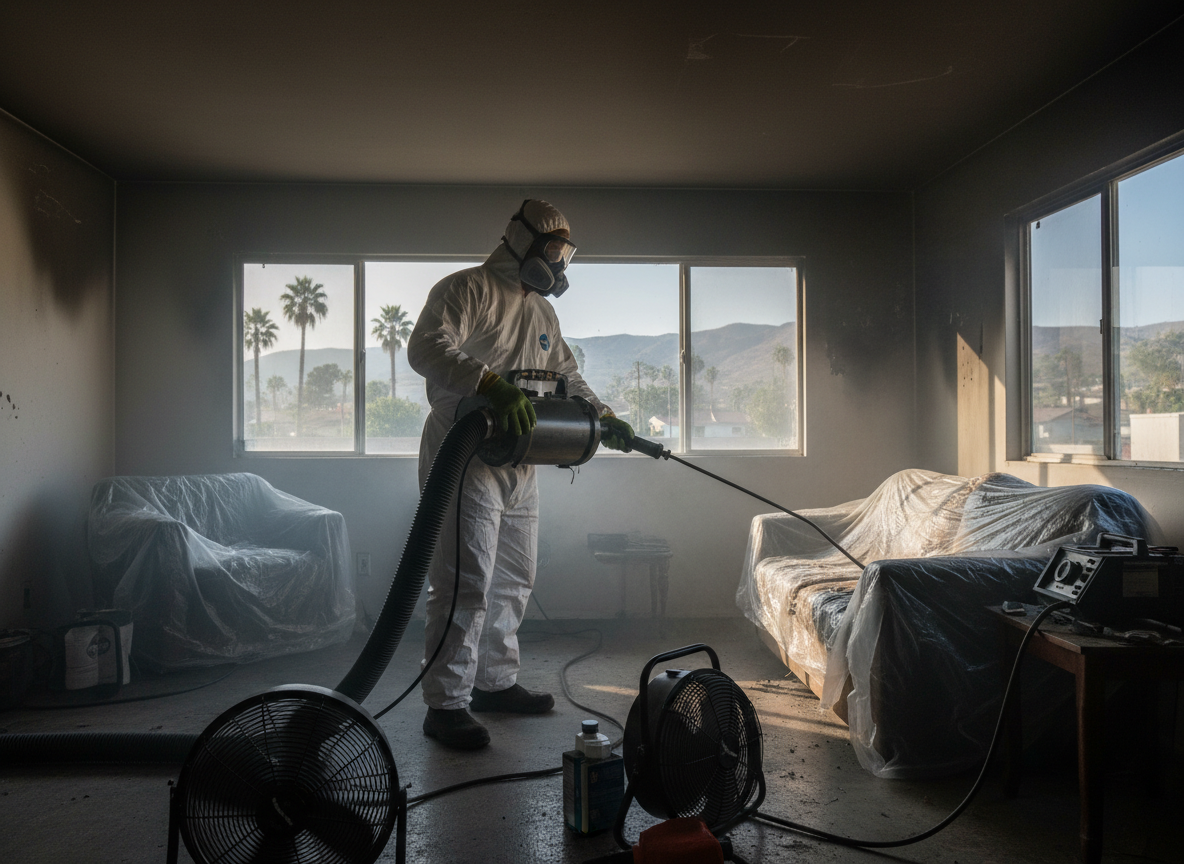
Fire Damage Restoration Canoga Park reaches Calabasas homes directly from the 23217 Saticoy St base. Crews handle the steep drive up Calabasas Road and into neighborhoods with larger lots and older ranch houses that sit close to open hillsides. Hot dry summers turn brush into fuel, so quick board-up and soot removal keeps smoke from settling into plaster and hardwood that many Calabasas properties still have.
The same Mediterranean climate that brings clear winter days also sends Santa Ana winds through the canyons. That means every job in Calabasas starts with checking attic vents and under-eave spaces where embers travel first. Technicians work room by room, pulling insulation from walls that back up to slopes and drying subfloors before mold sets in the cooler nights.
Warner Center traffic is avoided by taking the 101 to the 118 and dropping south on Topanga Canyon. That route gets equipment to Calabasas addresses faster when a call comes in at 2 a.m. from a homeowner near the Commons or along Mulholland.
Around Calabasas
We regularly work near:
- 📍Calabasas High School
- 📍The Commons at Calabasas
- 📍Calabasas Creek Park
- 📍Old Town Calabasas
- 📍Calabasas Lake
- 📍Malibu Creek State Park
Fire Damage Restoration Canoga Park in Calabasas — Local Notes
- •Calabasas hillside lots often require extra rigging and smaller equipment because driveways are narrow and steep, slowing removal of charred framing.
- •Many homes built in the 1960s and 1970s have lath-and-plaster walls that absorb smoke deeper than modern drywall, requiring longer dwell times with cleaning agents.
- •Dry summers and Santa Ana winds push fire risk from Malibu Creek State Park borders straight into backyards, so crews check for hidden ember damage in roof decks and attic insulation first.
- •Larger estate footprints mean more linear feet of baseboard and cabinetry to test for hidden moisture after suppression water sits on tile or hardwood.