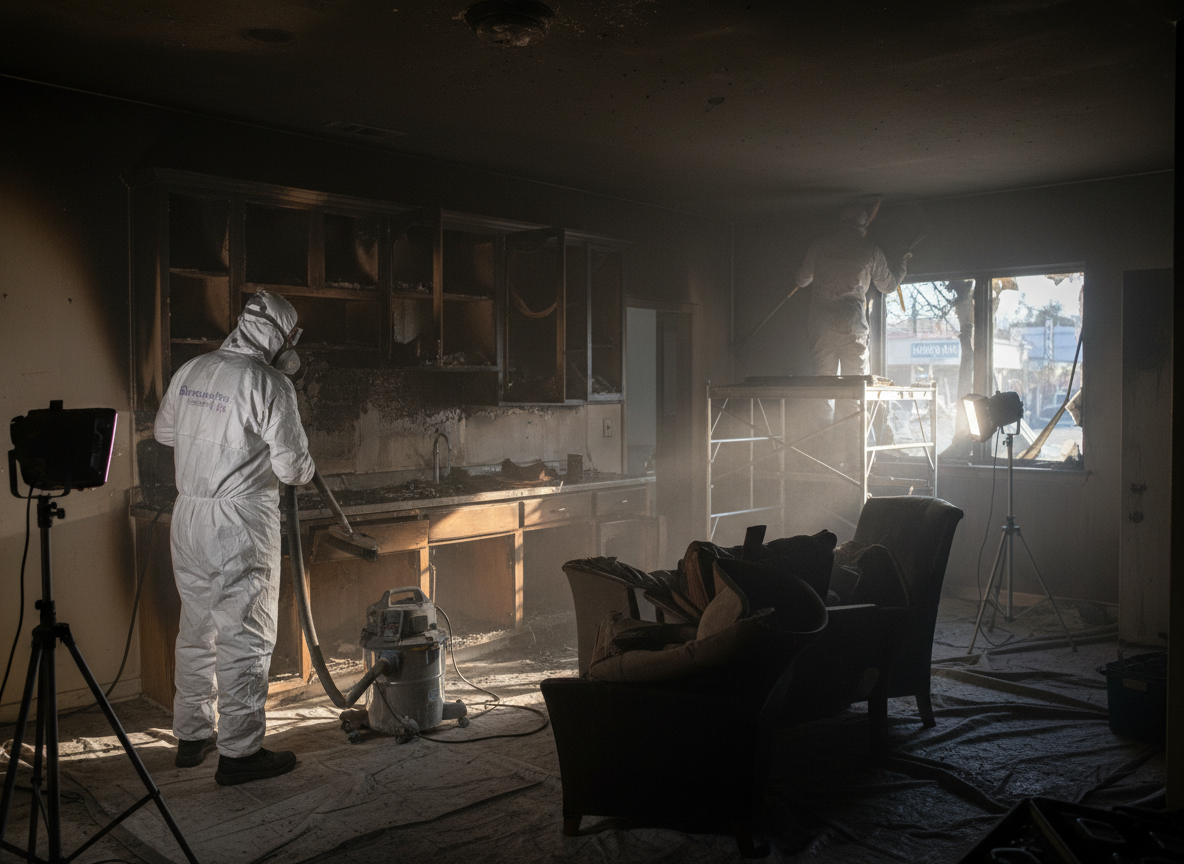
Smoke from structure fires in Canoga Park travels through HVAC systems and settles into the stucco and wood-frame homes common in the neighborhood. The warm Mediterranean climate with hot dry summers leaves interiors parched so soot bonds tightly to drywall, insulation and cabinetry. Technicians must isolate HVAC returns first then use negative air machines before any cleaning begins or odors will reappear once the system restarts. Older homes near Pierce College often have layered paint and unsealed attics that trap particulates deeper than newer builds in Warner Center.
Porous materials such as popcorn ceilings and carpet padding in Canoga Park properties absorb alkaline smoke residues that can corrode metal fixtures if left untreated. Restoration crews test pH levels on surfaces before applying specialty cleaners because neutral products fail on acidic soot common after electrical fires. Work in Los Angeles County requires proper containment to prevent cross-contamination into adjacent units common in multi-family buildings along Saticoy Street. Final clearance testing checks for residual odors that only become noticeable during the next Santa Ana wind event.
Contents cleaning for items stored in garages or near Westfield Topanga often involves ultrasonic methods for electronics and ozone treatment for textiles. Crews document every item removed because residents in the area frequently store family photos and documents in cardboard that readily absorbs smoke. Air scrubbing runs continuously for several days after visible soot is removed to address the fine particles that settle on horizontal surfaces in the dry local climate.
Technician insight
In Canoga Park the thing that catches most people out with smoke damage restoration is how quickly soot travels through the single-wall construction and unsealed attics of 1960s homes during our hot dry summers. Homeowners often start cleaning visible surfaces themselves and push fine particles deeper into carpet padding and wall cavities where they stay until the next heating cycle.
Smoke Migration Through HVAC in Canoga Park Home
A fire in an attached garage sent smoke through the central air ducts of a 1970s ranch house near Warner Center. Crews found heavy residue inside the ductwork and on ceiling textures throughout the living areas. They isolated the system, removed and cleaned registers, then ran negative air for three days before restoring airflow. The family returned once surface and air tests cleared.
How it works
- 1
Initial Assessment
Technicians arrive from the Saticoy Street location and document smoke migration paths through the home using moisture meters and visual inspection of HVAC runs.
- 2
Containment Setup
Plastic barriers and negative air machines isolate affected zones to stop soot from spreading into unaffected rooms common in Canoga Park single-story layouts.
- 3
Soot Removal
Specialty sponges and HEPA vacuums clean hard surfaces while contents are removed for off-site processing when porous materials show heavy residue.
- 4
Odor Neutralization
Thermal fogging and hydroxyl generators treat remaining odors that linger in insulation and subflooring after hot dry summer fires.
- 5
Clearance Testing
Air quality readings and surface pH tests confirm the property meets restoration standards before residents return.
Pricing
Cost depends on square footage affected, materials involved, and whether HVAC cleaning or contents processing is required.