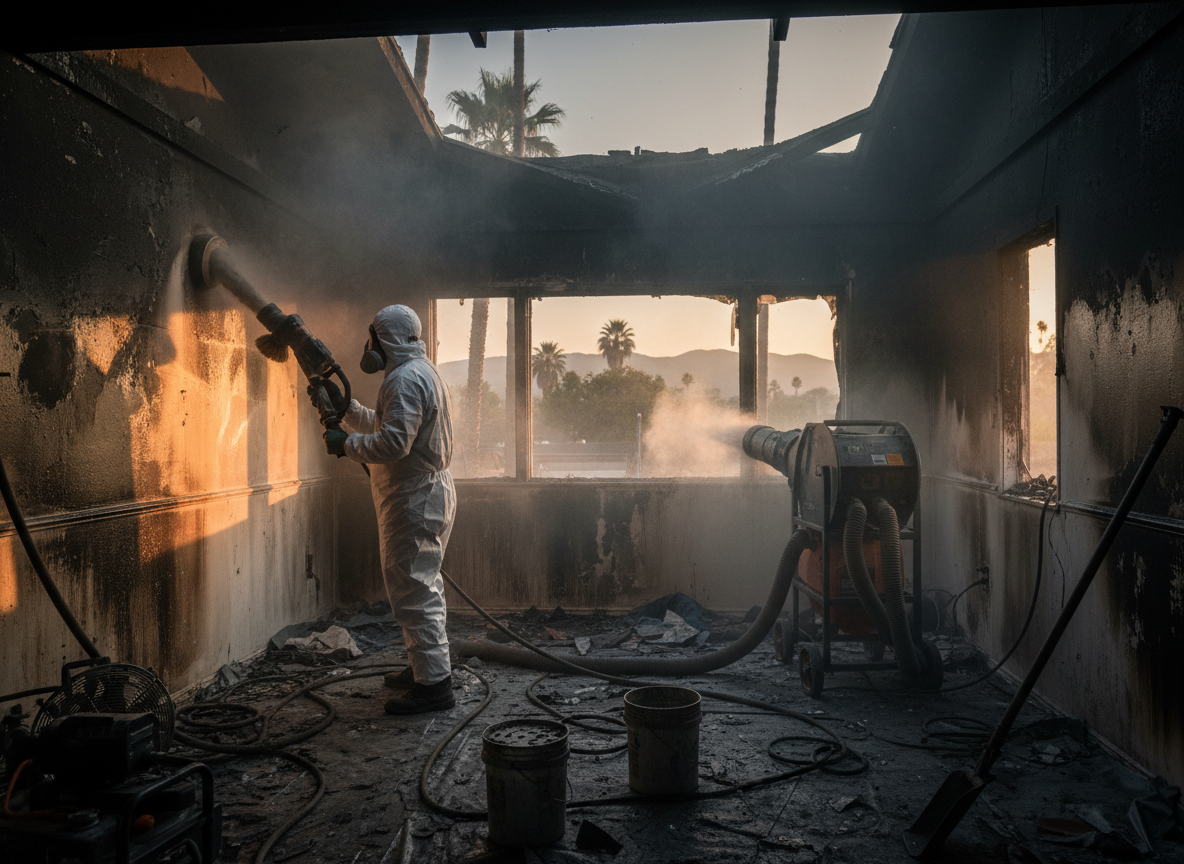
Smoke from structure fires in Canoga Park travels quickly through the single-story ranch homes built from the 1950s onward that line streets near Saticoy Street and Warner Center. Dry summer air lets fine particles settle deep into drywall, insulation, and the textured stucco exteriors typical here, while HVAC ducts in these older builds often carry odors into every room. Technicians begin by mapping airflow paths that standard cleaning misses, then use specialized equipment to pull residues from porous surfaces without spreading contamination to unaffected areas like those near Pierce College.
Los Angeles County properties in Canoga Park, Woodland Hills, Chatsworth, and Winnetka frequently feature forced-air systems and attic insulation that trap smoke long after visible soot is gone. Hot, low-humidity conditions accelerate chemical bonding to fabrics and wood trim, requiring solvent-based cleaners on hard surfaces and vapor-phase treatments for soft goods. Edge cases include secondary damage when residents run air conditioning too soon, pulling settled particles back into living spaces, or when Westfield Topanga-area commercial buildings share walls that allow smoke migration between units.
Verification involves air sampling and surface testing to confirm residues meet clearance standards before reoccupancy. Homeowners sometimes attempt ozone generators themselves, which can etch metal fixtures common in mid-century Canoga Park kitchens if concentrations or dwell times are misjudged. Proper sequencing prevents these outcomes and restores indoor air quality without introducing new irritants.
Seasonal Considerations
Hot, dry summers in the San Fernando Valley increase smoke adhesion to surfaces, requiring adjusted dwell times for neutralizers compared with cooler months when humidity helps lift particles naturally.
Technician insight
In Canoga Park, the thing that catches most people out with smoke remediation is how the hot dry summers let particles bond inside the original 1950s-70s ductwork and under the stucco layers that cover so many homes here. Homeowners often run the AC right after an incident and pull settled smoke back into every room near Warner Center or Saticoy Street. We always test the full system first instead of assuming visible surfaces tell the whole story.
Kitchen Fire Smoke in Canoga Park Ranch Home
A small cooking fire sent smoke through the central air system of a 1960s home near Westfield Topanga. Residues had settled inside attic insulation and returned through vents into bedrooms. We isolated the ducts, performed staged cleaning and neutralization, then verified clearance so the family could return without lingering odors.
How it works
- 1
Initial Assessment
Inspect affected rooms, HVAC paths, and hidden cavities in Canoga Park homes to map smoke migration.
- 2
Containment Setup
Isolate zones with barriers and negative air to prevent cross-contamination to unaffected areas.
- 3
Residue Removal
Apply HEPA filtration and appropriate cleaners to walls, ceilings, and contents.
- 4
Odor Neutralization
Deploy thermal fogging or hydroxyl treatments calibrated for the dry local climate.
- 5
Clearance Testing
Conduct air and surface checks before returning the property to normal use.
Pricing
Costs depend on square footage affected, depth of penetration into insulation and ducts, and whether contents require separate treatment.