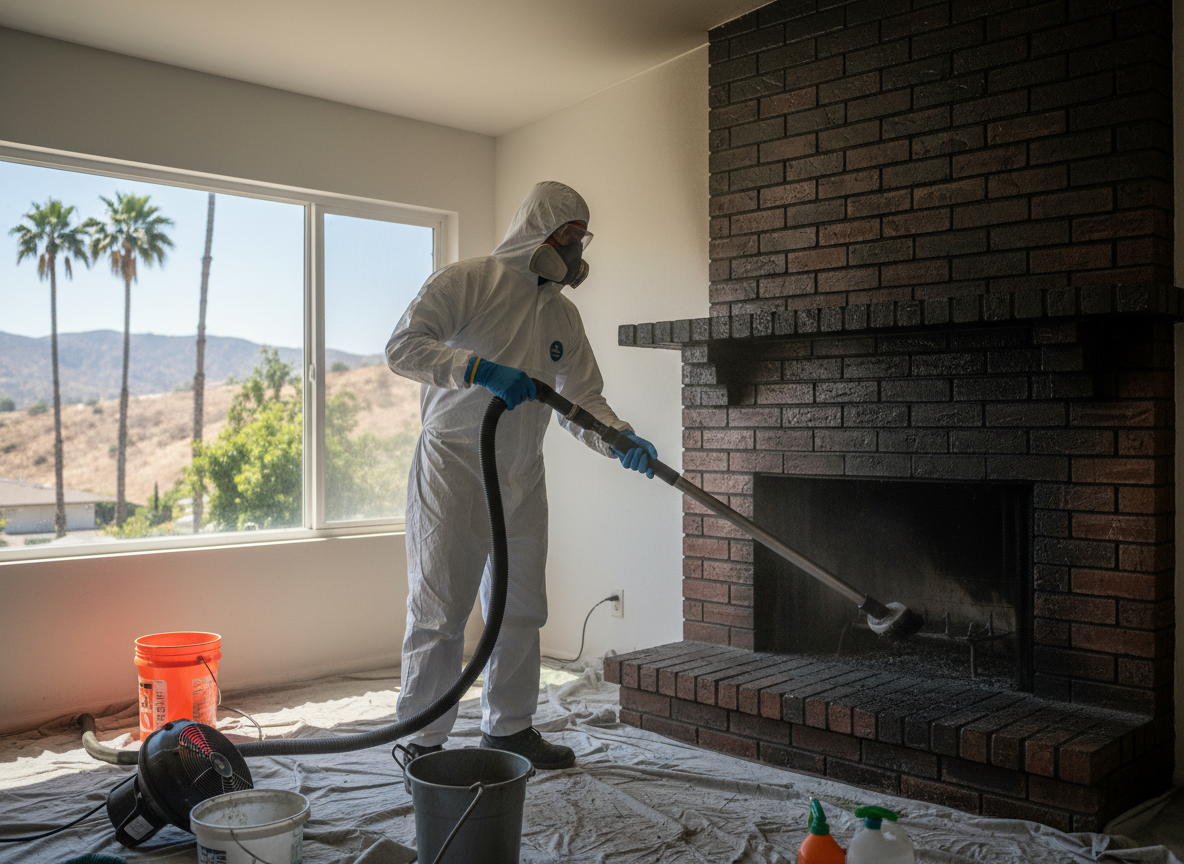
Soot from structure fires in Canoga Park settles deep into porous materials common in the area's 1950s and 1960s ranch homes, including drywall, insulation, and older plaster. The warm Mediterranean climate with hot dry summers allows fine particles to remain airborne longer and travel through HVAC systems, especially in homes near Westfield Topanga and Pierce College. Standard wiping fails because alkaline residues from burned synthetics can etch surfaces if not neutralized with the correct pH-balanced cleaners. Technicians must test surfaces first and use HEPA vacuuming followed by chemical sponges on non-porous items to avoid driving residue deeper.
In neighborhoods like Warner Center and Winnetka, multi-story homes with vaulted ceilings and attic spaces create hidden soot pockets that standard cleaning misses. Los Angeles County building codes require proper containment and disposal of contaminated materials to prevent cross-contamination during restoration. Dry summer conditions increase static that attracts soot to electronics and fabrics, requiring separate protocols for those items. Edge cases include soot mixed with water from suppression efforts, which creates acidic sludge that damages concrete slabs and subfloors common in Canoga Park construction.
Homeowners often overlook soot inside light fixtures, behind baseboards, and within ductwork near Chatsworth borders where older homes predominate. Professional removal uses air scrubbers with activated carbon to capture lingering odors and particles that re-deposit overnight in the dry local air. Skipping these steps leads to recurring discoloration weeks later when temperatures rise again. Every job starts with a room-by-room inspection to map migration paths created by the region's typical wind patterns through open windows and vents.
Technician insight
In Canoga Park, the thing that catches most people out with Soot removal is how the hot dry summers pull particles through the original ductwork in 1960s homes near Saticoy Street. Homeowners wipe visible walls and think the job is done, but residue stays in the vents and reappears on furniture within days when the Santa Ana winds pick up.
Kitchen Fire Soot in Warner Center
A kitchen fire in a Warner Center condo sent soot through the central air system. Inspection found residue coating attic insulation and inside return vents due to the dry climate. We contained the area, cleaned all surfaces and ducts, then ran air scrubbers until readings cleared. The home passed final inspection with no recurring odor or staining.
How it works
- 1
Initial Assessment
Inspect all affected rooms, HVAC systems, and hidden spaces in Canoga Park homes to map soot migration.
- 2
Containment Setup
Isolate work zones with plastic barriers and negative air machines to prevent spread to unaffected areas.
- 3
Surface Cleaning
Apply HEPA vacuuming and chemical sponges to walls, ceilings, and contents while testing for residue type.
- 4
HVAC and Air Purification
Clean ducts and run air scrubbers to remove airborne particles common in dry summer conditions.
- 5
Final Verification
Perform clearance testing and walk-through to confirm no visible or odor residue remains.
Pricing
Upfront quotes after on-site inspection; price varies with square footage, material types, and HVAC involvement.