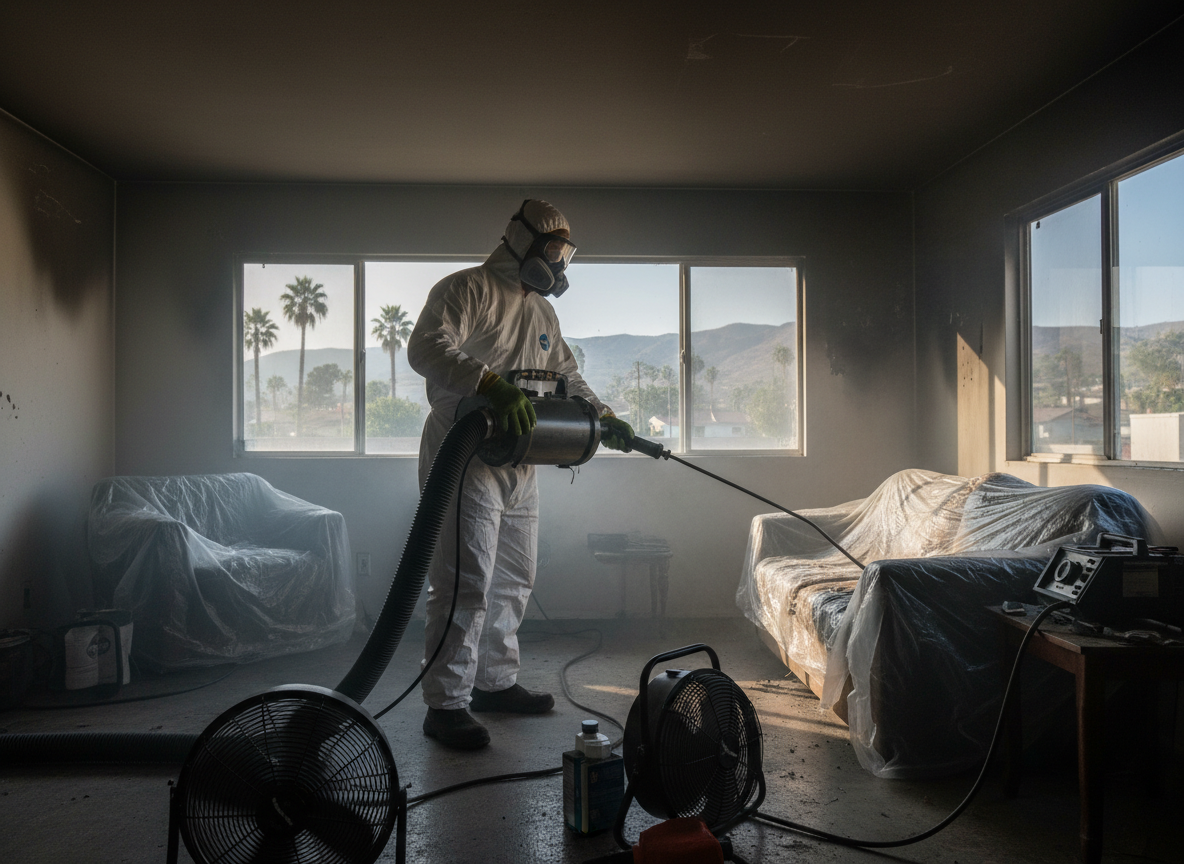
Smoke from structure fires in Canoga Park penetrates porous materials like drywall, insulation, and hardwood floors common in homes built before 1980 near Pierce College. The warm Mediterranean climate with hot dry summers accelerates this penetration because low humidity allows particulates to travel farther into wall cavities and attic spaces before settling. Technicians must map airflow paths created by HVAC systems that run continuously during heat waves, or residual odors will return once temperatures climb again in summer.
Los Angeles County building codes require removal of all contaminated porous materials before sealing surfaces, yet many Canoga Park properties near Chatsworth have layered renovations that hide original lath and plaster. Odor removal crews test for hidden soot using moisture meters and UV lights because standard cleaning fails on these older assemblies. Failure to address subflooring or crawl spaces in hillside homes around Winnetka often leads to recurring smells after the first rain.
Neutralizing agents must be chosen based on the fuel burned. Synthetic materials common in Warner Center commercial conversions produce different residues than natural wood fires in residential Canoga Park blocks. Application occurs in controlled stages, followed by air scrubbing and thermal fogging to reach spaces behind cabinets and under stairs. Homeowners in Woodland Hills frequently overlook attic insulation replacement, which reintroduces odors when attic temperatures spike during dry summer afternoons.
Technician insight
In Canoga Park the thing that catches most people out with odor removal after fire is how the dry summer heat drives smoke deep into the single-wall construction common in homes west of Topanga Canyon Boulevard. Homeowners think wiping visible surfaces is enough but the real work is pulling insulation from wall cavities that never see airflow until the next Santa Ana wind event.
Hidden Smoke in 1960s Canoga Park Ranch Home
After a kitchen fire, owners noticed odors returning each afternoon. Inspection found smoke had traveled through the original knob-and-tube wiring channels into the attic. Crews removed contaminated batt insulation, treated the rafters, and resealed the ceiling plane. Odors did not return once summer temperatures rose.
How it works
- 1
Initial Assessment
Inspect affected rooms, HVAC runs, and attic spaces in Canoga Park homes to locate all smoke migration paths.
- 2
Source Removal
Remove charred debris and contaminated insulation from walls and ceilings before any odor treatment begins.
- 3
Deep Cleaning and Sealing
Apply specialized cleaners to hard surfaces then seal remaining porous materials to lock in residual odors.
- 4
Air Purification
Run HEPA scrubbers and perform thermal fogging to neutralize airborne particles throughout the structure.
Pricing
Cost depends on square footage affected, number of HVAC zones, and whether older plaster or insulation must be removed.