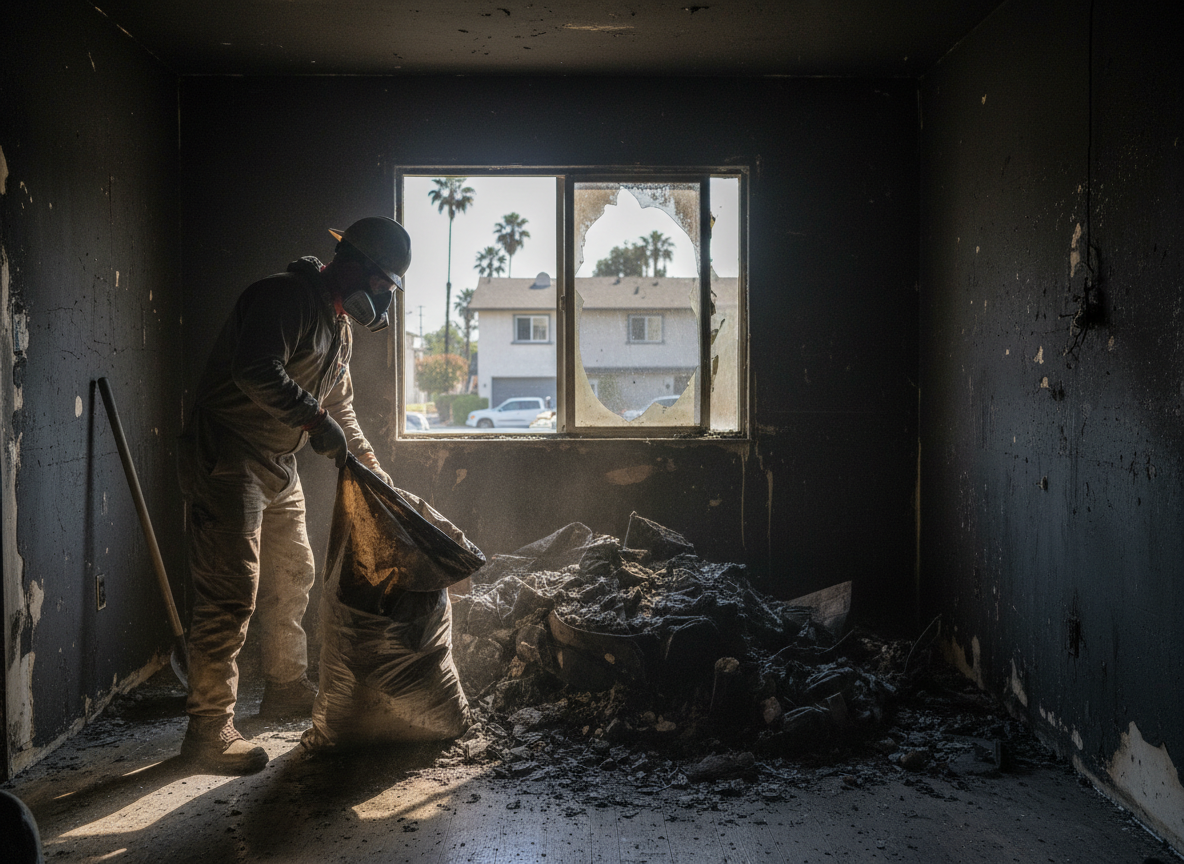
Apartment fires in Canoga Park often involve shared walls and HVAC systems that allow smoke to travel into neighboring units, especially in buildings near Warner Center and Pierce College. Hot dry summers accelerate soot adhesion on drywall, carpet and cabinetry, requiring HEPA vacuuming followed by chemical neutralization rather than simple wiping. Crews address edge cases like hidden residue inside electrical boxes and under baseboards where older construction leaves gaps that trap particulates.
Los Angeles County code requires proper disposal of contaminated porous materials and documentation of air quality before re-occupancy. In multi-story apartments common around Westfield Topanga, negative air machines must run continuously to prevent cross-contamination through stairwells and laundry chutes. Technicians test for pH levels on surfaces because alkaline soot from synthetic furnishings can damage finishes if not neutralized correctly.
Cleanup begins with isolating the affected unit from hallways and adjacent apartments using plastic barriers and air scrubbers. Contents are inventoried, cleaned or discarded based on porosity, then surfaces receive multiple passes of specialized detergents. Final verification includes moisture mapping and odor checks before any reconstruction starts in units throughout Canoga Park, Woodland Hills, Chatsworth and Winnetka.
Technician insight
In Canoga Park, the thing that catches most people out with Apartment fire cleanup is how fast smoke travels through the shared HVAC ducts in 1970s-era buildings during our hot dry summers. One unit fire near Warner Center can coat three floors if the system is not shut down and isolated immediately. Homeowners often try wiping surfaces themselves and only spread the alkaline soot deeper into the texture.
Warner Center Apartment Unit Fire
Smoke from a kitchen fire on the second floor traveled through the building's central air system into units above. Crews isolated the HVAC, ran negative air machines through the stairwell, and cleaned residue from drywall and cabinetry in four affected apartments. The owner was able to reopen the building within five days after verification testing.
How it works
- 1
Secure and Assess
Technicians arrive from the Saticoy Street location, board openings, and document all damage while testing air quality in the unit and surrounding apartments.
- 2
Contain Smoke Migration
Plastic sheeting and negative pressure machines isolate the affected apartment from hallways and neighboring units to stop soot movement through shared vents.
- 3
Remove and Clean
Porous materials are removed, surfaces receive HEPA vacuuming and pH-neutral cleaning, and HVAC components are treated to eliminate embedded residue.
- 4
Verify and Restore
Air quality and surface tests confirm the space meets safety standards before contents are returned and minor repairs begin.
Pricing
Pricing depends on square footage affected, number of units impacted, and whether HVAC systems require full cleaning; an on-site assessment provides the exact scope.