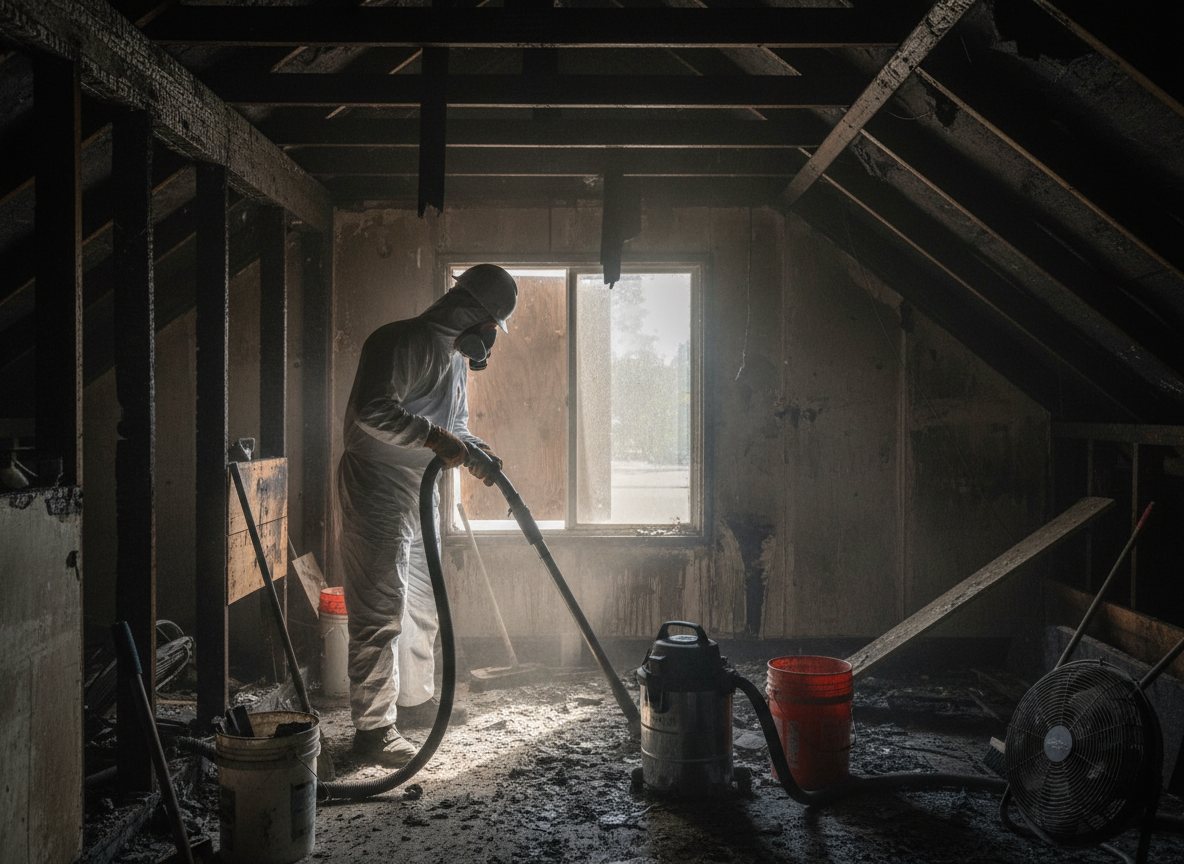
Attic fires in Canoga Park often start from overloaded knob-and-tube wiring in homes built before 1960 or from HVAC units straining during the hot, dry summers that stretch from May through October. Restoration begins with a full assessment of charred rafters, melted insulation, and soot that travels through the open truss spaces typical in Warner Center tract homes. Crews must separate reusable sheathing from compromised sections while protecting the living space below, especially when ceilings are plaster over lath rather than drywall. Ventilation is critical because the warm Mediterranean climate keeps attics hot long after the fire is out, accelerating corrosion on metal connectors if moisture from suppression water is not fully extracted.
Smoke residue in Canoga Park attics frequently contains plastics from modern roofing underlayment and stored holiday decorations, requiring HEPA vacuuming followed by chemical neutralization rather than simple washing. Technicians check for hidden ember pockets in the cellulose or fiberglass batts common in homes near Pierce College, where retrofits from the 1980s left inconsistent fire stops. Los Angeles County code now requires upgraded attic ventilation and new fire-rated baffles when more than 25 percent of the structure is affected, so restoration plans include documentation for permit submission. Homeowners in nearby Chatsworth and Winnetka face the same issues when fires cross property lines through shared attic spaces in attached garages.
Edge cases include rodent-damaged wiring that reignites days later and solar panel conduit runs that complicate access on 1970s ranch roofs. Proper containment prevents soot migration into HVAC systems that serve both the attic and main living areas, a frequent complaint after fires near Westfield Topanga. Final verification includes moisture metering of all wood members and thermal imaging to confirm no residual heat remains before new insulation is installed.
Seasonal timing matters because summer humidity drops below 20 percent, making dust and soot more airborne during demolition and increasing the risk of cross-contamination into adjacent bedrooms.
Technician insight
In Canoga Park the thing that catches most people out with attic fire restoration is how quickly soot travels through the open truss spaces in pre-1970 homes when the dry summer winds pick up. Homeowners try to clean it themselves with box fans and end up pushing residue into the HVAC that serves the whole house. We always pull the ducts first.
Electrical Fire in 1962 Canoga Park Ranch
An overloaded circuit in the attic ignited insulation during a July heat wave. We found extensive charring along the ridge and soot throughout the truss cavities that had migrated into two bedrooms. After removing damaged materials and neutralizing residue we sistered rafters, installed new baffles, and upgraded ventilation to pass inspection. The family moved back in within ten days with no lingering odor.
How it works
- 1
Initial Assessment and Safety
Technicians arrive 24/7 to document fire origin, test structural integrity of rafters, and set up containment to prevent soot spread into living areas below.
- 2
Debris Removal and Cleaning
Charred insulation, wiring, and roofing materials are removed, followed by HEPA vacuuming and application of odor-neutralizing agents on all remaining surfaces.
- 3
Structural Repairs and Code Upgrades
Damaged rafters are sistered or replaced, new fire-rated baffles installed, and ventilation upgraded to meet current Los Angeles County requirements before insulation replacement.
- 4
Final Verification and Clearance
Moisture levels, air quality, and thermal imaging confirm the attic is dry and safe; documentation is provided for insurance and permitting.
Pricing
Cost depends on square footage affected, extent of structural damage, and whether Los Angeles County permit upgrades are triggered.