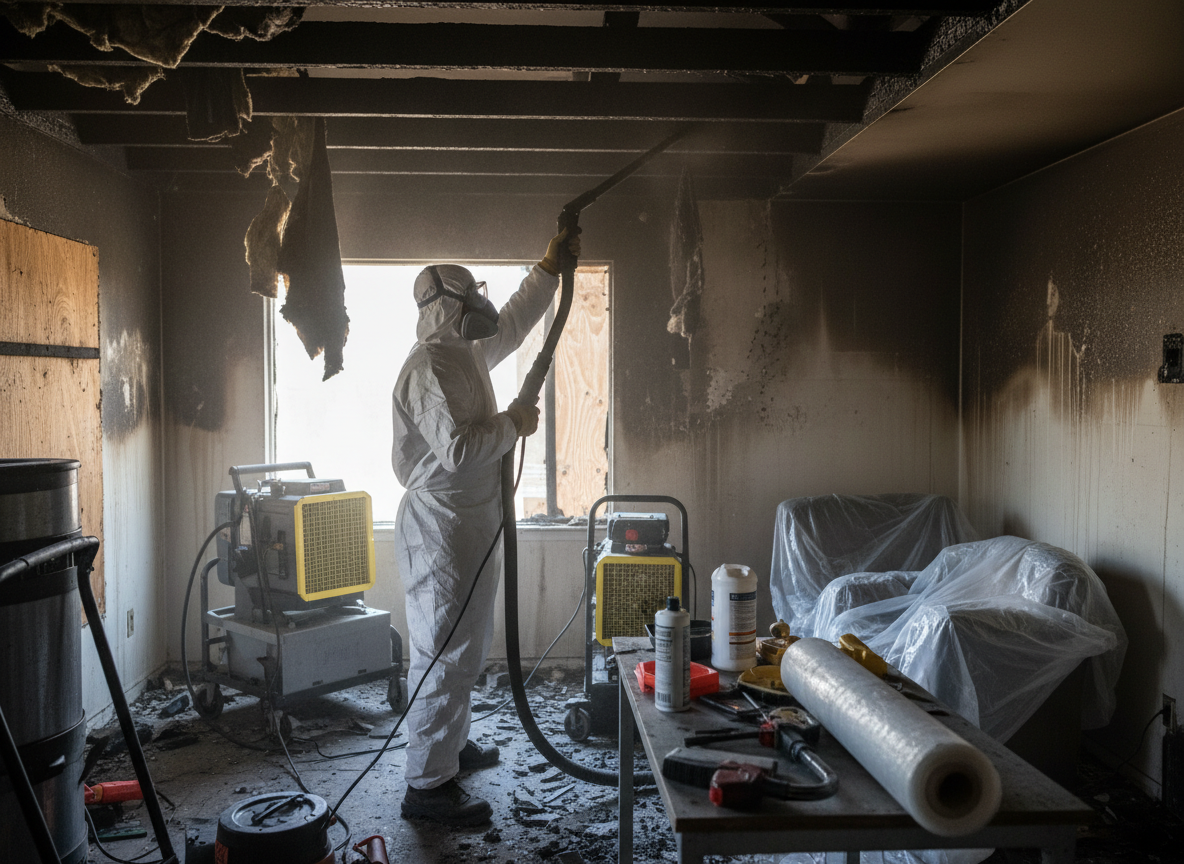
Canoga Park homes built in the 1950s and 1960s often feature wood-frame construction with stucco exteriors that allow smoke to travel through attics and wall cavities during fires. Hot, dry summers increase the frequency of regional wildfires, sending fine particulate smoke into neighborhoods near Westfield Topanga and Pierce College. Restoration crews must remove charred materials and neutralize acidic soot before it etches metal fixtures or discolors drywall in these older structures.
Smoke odor lingers in HVAC systems common to ranch-style homes around Warner Center, requiring duct cleaning and filter replacement to prevent recontamination after the initial fire event. Los Angeles County building codes mandate permits for structural repairs following significant fire damage, so crews coordinate inspections with local authorities before replacing insulation or electrical wiring compromised by heat. Properties near Chatsworth and Winnetka face added challenges from wind-driven smoke that infiltrates single-story layouts through eaves and garage doors.
Technicians test porous materials such as carpet padding and cabinetry for hidden moisture introduced during firefighting, since residual water can lead to mold growth in the Mediterranean climate. Edge cases include hidden ember pockets in crawl spaces beneath homes near Saticoy Street, which demand infrared scanning before final clearance. Work stops only after air quality readings confirm safe levels for reoccupancy.
Technician insight
In Canoga Park, the thing that catches most people out with fire and smoke damage restoration is how quickly smoke travels through the open attic spaces in 1960s ranch homes near Warner Center. Once it settles into the fiberglass insulation, you cannot simply wipe surfaces; the whole layer has to come out or the odor returns every time the heat kicks on during a dry summer.
Attic Smoke Migration in Canoga Park
A kitchen fire in a 1964 ranch home sent smoke through the attic shared with the garage. We found soot coating every rafter and insulation batt. Crews removed the insulation, cleaned the framing with alkaline solutions, and replaced the HVAC filters before rebuilding the ceiling. The family returned after five days with no lingering odor.
How it works
- 1
Initial Assessment
Technicians arrive within hours, document all affected rooms, and test surfaces for soot depth and pH levels.
- 2
Containment and Safety
Plastic barriers isolate damaged zones while crews secure utilities and remove standing water left by firefighters.
- 3
Soot Removal and Cleaning
HEPA vacuums and specialized sponges clean non-porous surfaces; porous items are logged for disposal or off-site treatment.
- 4
Odor Neutralization and Drying
Ozone or hydroxyl generators treat air while dehumidifiers dry wall cavities and subfloors.
- 5
Repairs and Final Clearance
Rebuild damaged sections, reinstall fixtures, and verify air quality before returning the property to the owner.
Pricing
Upfront quotes based on square footage affected and materials involved; no hidden fees.