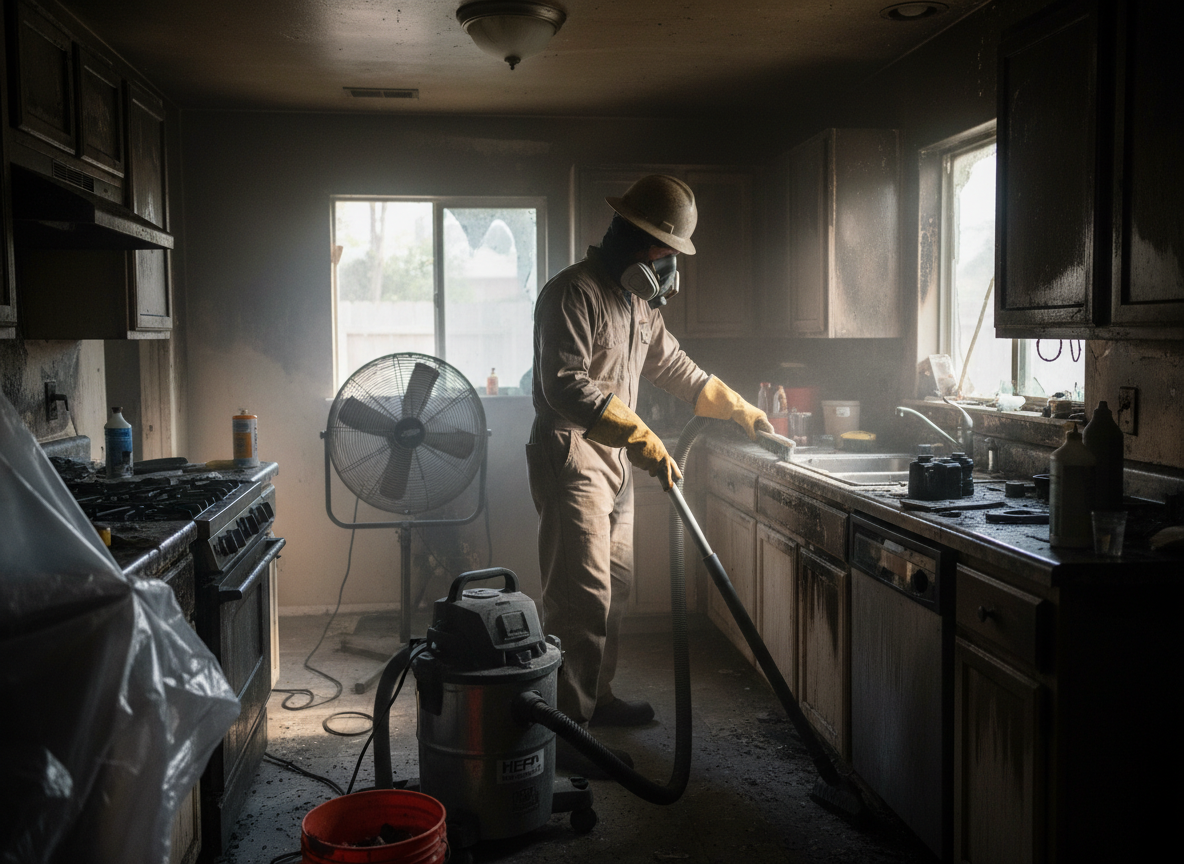
Canoga Park homes built in the 1950s and 1960s often feature wood-frame construction with lath-and-plaster walls that trap soot deep in cavities. After a fire, the hot dry summers common here pull residual smoke odors back out through HVAC systems if ducts are not cleaned thoroughly. Restoration crews must pull baseboards and open wall cavities along shared property lines in neighborhoods near Westfield Topanga to stop odor migration into adjacent units.
Los Angeles County code requires permits for any structural repairs exceeding 10 percent of the building value, which changes how crews sequence demolition and rebuild in Canoga Park. Smoke from fires that start in garages or carports travels upward through balloon framing common in the area, leaving acidic residue on attic insulation that must be removed rather than sealed. Crews based at 23217 Saticoy St respond 24/7 and stage equipment on narrow residential streets where parking limits large truck access.
Pierce College area properties sit on slightly higher ground with older electrical panels that can fail during post-fire power restoration, requiring coordination with Southern California Edison before dehumidification begins. Dry summer winds push smoke into neighboring homes in Winnetka and Chatsworth, so crews test for cross-contamination before final clearance testing.
Technician insight
In Canoga Park the thing that catches most people out with fire damage restoration near me is how the dry summer winds pull soot back out of wall cavities weeks after the fire is out. Older balloon-framed houses near Warner Center let smoke travel into attics that share space with the house next door, so one skipped inspection can leave odor complaints from three addresses away.
Garage fire smoke migration into adjacent units
A fire started in a detached garage on a Canoga Park street near Pierce College. Smoke traveled through shared attic space into two neighboring homes. Crews opened cavities along the property line, removed contaminated insulation, and ran negative air machines until clearance testing passed.
How it works
- 1
Emergency Board-Up
Secure openings and tarps to prevent weather intrusion and unauthorized entry after fire department release.
- 2
Soot and Smoke Removal
HEPA vacuum and chemical cleaning of surfaces, followed by HVAC duct inspection and cleaning.
- 3
Structural Drying and Odor Treatment
Remove affected insulation and drywall, then apply odor neutralizers and run air scrubbers.
- 4
Rebuild and Final Clearance
Replace damaged materials to code and perform third-party air quality testing before reoccupancy.
Pricing
Pricing varies with fire size, smoke migration into HVAC systems, and whether permits are required for structural repairs.