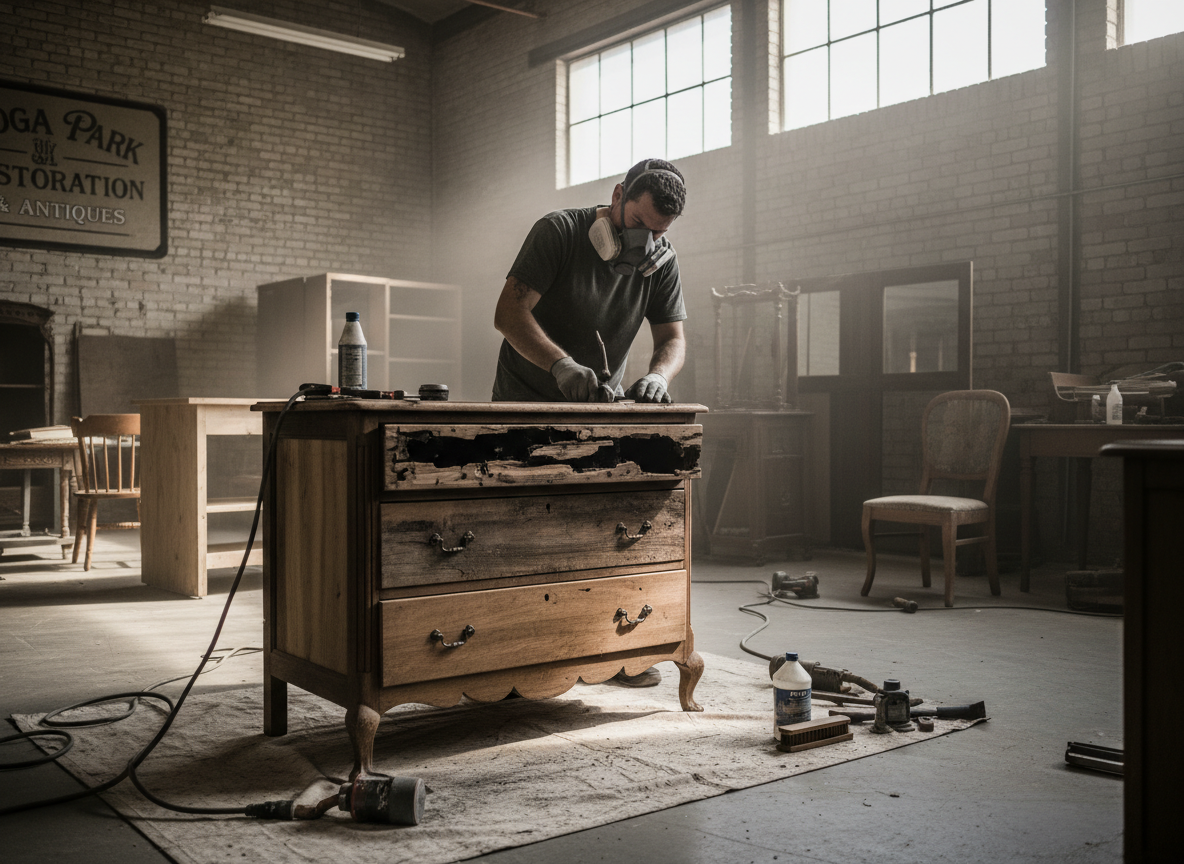
In Canoga Park's warm Mediterranean climate with hot, dry summers, smoke from structure fires travels quickly through single-story ranch homes common near Pierce College and Warner Center. Upholstered pieces and solid wood furniture absorb fine soot particles that standard household cleaning cannot reach, especially in older stock where varnish and fabric have aged. Technicians based at 23217 Saticoy St respond within hours to limit permanent discoloration before the next Santa Ana wind event carries additional contaminants.
Edge cases appear regularly with items stored in garages or patios facing Chatsworth or Winnetka. Heat from the fire can warp particleboard frames while leaving the exterior looking intact, and residual hydrocarbons react with summer humidity spikes to create new stains weeks later. Restoration requires separate handling of each material layer, with solvent testing on hidden areas to avoid lifting original finishes common in 1960s and 1970s Canoga Park builds.
Los Angeles County fire codes require disposal of heavily contaminated cushions that cannot be cleaned to non-detectable levels, so technicians document every step for insurance adjusters. Work often includes disassembly at the Saticoy Street shop when on-site equipment cannot handle large sectional sofas from nearby Westfield Topanga area homes.
Technician insight
In Canoga Park, the thing that catches most people out with fire-damaged furniture restoration is how the hot, dry summers let soot work deep into the unfinished backs and undersides of mid-century wood pieces common in homes near Warner Center, so a quick wipe-down at home never works.
Sectional Sofa Recovery Near Westfield Topanga
Smoke from a kitchen fire reached a living-room sectional in a Canoga Park home bordering Woodland Hills. Inspection showed heavy soot on all fabric surfaces and light heat warping on one wooden leg. Crews disassembled the piece at the Saticoy Street shop, cleaned each component separately, neutralized odors, and returned it with no visible residue or odor after three days.
How it works
- 1
Initial Assessment
Inspect each piece on site for smoke penetration depth, heat damage, and material type while noting proximity to the fire origin.
- 2
Pre-Cleaning and Containment
Remove loose soot with HEPA vacuums and isolate items to prevent cross-contamination during transport to the Saticoy Street facility.
- 3
Material-Specific Cleaning
Apply pH-balanced solutions to wood, fabric, and leather separately, followed by multiple rinses and drying under controlled conditions.
- 4
Odor Neutralization and Repair
Treat with ozone or thermal fogging, then perform structural repairs and refinishing where frames remain sound.
- 5
Final Inspection and Return
Return items only after clearance testing confirms no detectable smoke residue remains.
Pricing
Cost depends on number of pieces, material types, and smoke saturation level; upfront quotes provided after inspection.