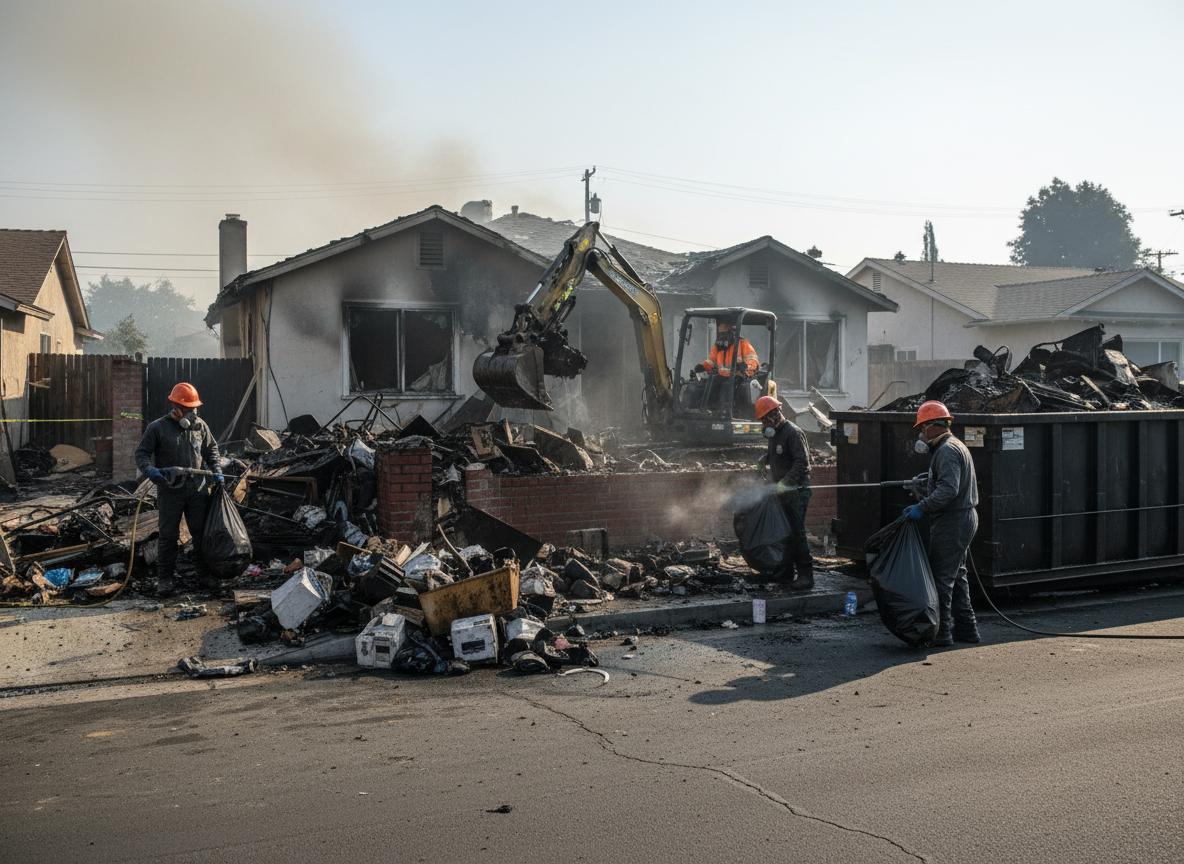
Canoga Park homes built in the 1950s and 1960s often feature stucco exteriors and tight interior layouts that trap smoke and soot when hoarded materials ignite. Hot, dry summers common in Los Angeles County accelerate drying of paper, fabrics, and plastics, creating pockets where embers can smolder undetected for hours. Crews must first isolate power and gas lines before any removal begins, especially in neighborhoods bordering Chatsworth where older wiring increases secondary ignition risks during cleanup.
Near Warner Center and Pierce College, many single-family homes sit on flat lots with minimal setbacks, so smoke migrates quickly into neighboring units. Hoarded items absorb water from suppression efforts and then release it slowly, fostering mold within days under the Mediterranean climate. Technicians use negative-air machines and HEPA filtration to contain particulates while sorting through layers of debris that may conceal melted wiring or compromised drywall.
Cleanup requires separating salvageable items from those fused by heat, then disposing of contaminated materials at permitted Los Angeles County facilities. Edge cases include attics packed with insulation that has absorbed oily soot, which can drip during removal and stain remaining surfaces. Work stops for air monitoring whenever carbon monoxide readings rise from disturbed debris in enclosed spaces typical of Winnetka-adjacent properties.
Technician insight
In Canoga Park, the thing that catches most people out with hoarding cleanup after fire is how the hot dry summers bake accumulated paper and fabrics inside 1960s stucco homes near Westfield Topanga, creating hidden ember pockets that reignite when we start moving debris if we skip repeated thermal scans.
Cluttered garage fire near Pierce College
A garage packed with stacked boxes and old furniture caught fire from an overloaded outlet in a Canoga Park home. We found smoldering insulation behind the hoarded items and water-soaked drywall that had begun to mold. Crews set up containment, removed and sorted the debris layer by layer, then treated surfaces for soot before clearance testing.
How it works
- 1
Site Assessment and Safety
Technicians inspect the property for structural integrity, hidden hotspots, and hazardous materials while documenting the extent of hoarded debris and smoke penetration.
- 2
Containment and Ventilation Setup
Negative pressure zones and air scrubbers are installed to prevent soot migration into unaffected areas of the Canoga Park home.
- 3
Debris Removal and Sorting
Layered materials are systematically removed, with items categorized for disposal, cleaning, or salvage under Los Angeles County waste guidelines.
- 4
Soot Neutralization and Surface Cleaning
Specialized agents treat affected surfaces, followed by HEPA vacuuming and odor removal to restore air quality.
- 5
Final Verification and Clearance
Air quality testing and visual inspection confirm the space meets safety standards before returning access to the homeowner.
Pricing
Upfront quotes based on debris volume, affected square footage, and required containment; no two Canoga Park jobs are identical.