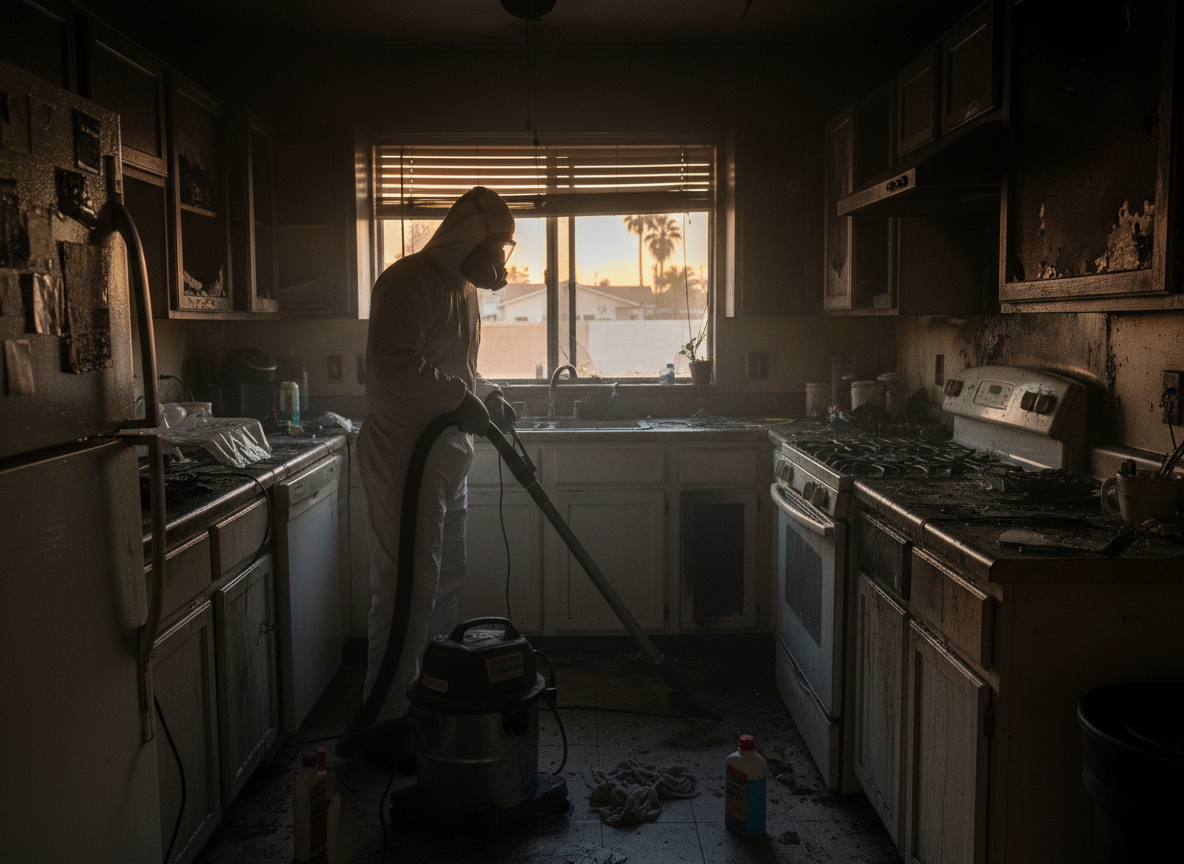
Kitchen fires in Canoga Park often start from grease buildup on older stoves common in 1950s-1960s ranch homes throughout the neighborhood and nearby Winnetka. Hot, dry summers increase the risk as residents run ovens and stovetops more frequently with windows closed to keep out heat. Soot travels quickly through single-story layouts and into HVAC ducts, requiring full system cleaning rather than surface wiping alone. Ignoring hidden residue leads to recurring odors and corrosion on metal fixtures.
Cleanup begins with isolating affected zones to prevent cross-contamination into living areas near Pierce College or Warner Center. Technicians use specialized HEPA vacuums and alkaline cleaners formulated for protein-based smoke from kitchen fires, which differs from wood or plastic smoke. In Los Angeles County homes, drywall and cabinetry from that era absorb odors deeply, often needing removal of porous materials like insulation behind ranges. Odor neutralization follows with hydroxyl generators to reach cavities without masking agents.
Post-cleanup verification includes air quality checks and thermal imaging to confirm no embers remain in wall voids, a step critical after grease fires that can reignite days later. Residents in Chatsworth and Woodland Hills face similar issues due to shared housing stock and climate patterns that keep humidity low, allowing soot to remain airborne longer. Final walkthroughs focus on restoring surfaces to pre-loss condition while documenting every step for insurance purposes.
Technician insight
In Canoga Park, the thing that catches most people out with Kitchen fire cleanup is how quickly grease smoke penetrates the thin drywall and single-wall ductwork of 1960s homes during our hot dry summers, when closed-up houses let residue settle deep before anyone notices.
Kitchen Fire Near Warner Center
A cooking fire spread soot through the kitchen and into the hallway of a Canoga Park ranch home. Inspection revealed heavy residue inside the HVAC system and behind cabinets. Crew contained the area, cleaned ducts, removed affected drywall sections, and neutralized odors throughout. The home returned to normal use within days without lingering smells.
How it works
- 1
Initial Assessment
Inspect all affected rooms, HVAC, and hidden cavities for soot depth and smoke migration patterns.
- 2
Containment and Safety
Seal off kitchen and adjacent spaces, remove hazards, and establish negative air pressure.
- 3
Soot and Residue Removal
Apply appropriate cleaners to hard surfaces, extract from ducts, and dispose of contaminated porous materials.
- 4
Odor Elimination and Restoration
Deploy odor neutralization equipment and perform final cleaning before returning the space to use.
Pricing
Upfront quotes after on-site inspection; price depends on square footage affected, HVAC involvement, and material removal needs.